I finally got to watch Andy Lau's Days Of Tomorrow, a trifle over dramatic and some over acting, but the modern day flashback mode brings forth a wonderful movie. People living desperate lives by the choices they made at a critical juncture of their lives. Its why we care for those who would never cry for us, and why we cry for those who would not care for us, and yet ... we too do not care for those who cry for us - the sad realities of life, sometimes taking a lifetime of wasted anger to dissolve, ... taking a lifetime to cherish a fleeting memory.
I have embedded the ending of the movie and the final minutes ending with a most wonderful song: At The End Of A Rainbow by Earl Grant. If you wish, you could search for the whole movie on You Tube. Its worthwhile.
Saturday, 5 November 2011

Friday, 4 November 2011
And Now For Something Completely Different ...
I only like Andy Lau in movies. I am so thankful to be able to say I have never bought even one album of his. All his singing fans really are die-hard fans. Discovered this by accident, enjoy ... love the slang/intonation with certain Malay words, certainly did not study in Malaysia.
Wednesday, 2 November 2011
What If Greece Defaults
Naturally, Sarkozy must be incensed with Pappy deciding to call for a referendum on the Euro package. This is like you have a relative who is being hounded by loan sharks, so much so that all your other relatives got together and put up a decent package, with a 50% haircut on the debt that the loan sharks have agreed to .... and then to discover that the low life relative may not want the rescue package. Not that he.she has any alternative, I guess he/she does, in not paying at all.

Pappy surprised everyone by declaring the referendum but you cannot call a referendum on a fiscal matter. You may frame it like "Are you in favour of the Euro rescue package?". Pappy is on a double edge sword, barely able to maintain control, I guessed his thinking is the referendum might do one of two things. A YES, he will get control and political will to push through the reforms and possibly save his political career. A NO, he will be out anyway. However, if he goes ahead with the Euro plan without a referendum, he knows that he is bound to be faced with huge strikes, revolts and riots anyway ... which may cause an early fall in politics for him within weeks of implementation.
The key question for us in Asia is how would that affect the markets. There should be an initial knee jerk sell down for a few days, but thankfully the US, Asia and Latin America are not really involved. Yes, there will be indirect hits but the markets have discounted a Greek default a long way. That's why markets shot up like 5% on news of the Euro package. Now we have to give that all back.
A Greek default would be much larger than other recent defaults, like the one in Argentina in 2001 or Russia in 1998. Greek public debt now comes to about $500 billion. Argentina’s debt when it defaulted was $82 billion, and Russia’s was $79 billion.
The size of Greece’s public debt assures that the consequences of a Greek default would ravage the Greek economy. Inside Greece, banks would face huge losses on bonds in their portfolios and would have to close their doors until somebody recapitalized them. The thing is that the men and women on the streets of Athens only focus on the hardships in job losses and pay cuts. When all of your banks close shop, you will see a greater hit on the real economy via hoarding, unrest, hyper inflation and a dire scarcity of goods and services.

The economy would grind to a halt. Some projections put the contraction in the gross domestic product at more than of 25%. ATMs would stop working. Business credit would dry up, and businesses would shut their doors. The government would be unable to pay its bills.
But the damage wouldn’t stop at Greece’s borders. Bond buyers would flee Italian and Spanish government bonds, requiring the European Central Bank and the European Financial Stability Facility—if it’s set up by then—to pour billions into buying those bonds to support the markets.
European banks would take a huge hit as the value of Greek government and corporate debt in their portfolios plunged. Big banks and insurance companies in Germany had a total exposure of $33 billion to Greek government and corporate debt as of the end of March, according to the Bank for International Settlements. French banks had exposure to Greek public and private debt of almost $80 billion.

That exposure is not spread evenly. In France, much of it is concentrated at three big banks: Crédit Agricole, Société Générale, and BNP Paribas. In Germany, the government set up bad banks as part of its bailout of Hypo Real Estate Holding and WestLB. Those bad banks hold more than half of all the Greek debt held by German banks, and would undoubtedly need another infusion of taxpayer cash.
Exactly how far the damage would go depends on the degree to which bond markets would punish the bonds of Portugal, Ireland, Italy, and Spain, which, along with Greece, make up the so-called PIIGS group.
The exposure of US banks to Greek debt alone is relatively small. But US banks have $670 billion in exposure to all five of the PIIGS group. And it depends on whether a default would force Greece out of the euro. That’s not an inevitable result. Greece could default on its huge debt to banks, but pay its relatively smaller debt to international creditors such as the International Monetary Fund, the European Union, and the ECB.
Those institutions might even see a capital infusion into Greek banks—along with a process that rolled up bad banks under new, perhaps overseas ownership—as a better alternative than the end of the European Monetary Union.
The consequences of a collapse of the euro would be huge on even a strong economy such as Germany's. UBS estimates that a collapse of the euro that left Germany on its own could produce a loss of as much as 20% to 25% of German GDP in the first year after a breakup.

Those scenarios seem so grim that it’s hard to imagine any rational politician steering his or her country into that storm. And that’s been the strongest argument—one that I’ve made on more than one occasion—for saying that Greece won’t default and that Europe will figure out a way to rescue the country from its debt spiral.
There is another way to look at the “Why would Greece default?” question. IMF economists studying past sovereign defaults came to a conclusion that turns any approach to answering this question on its head. It turns out that in past defaults—including defaults by Argentina, Ecuador, and Indonesia—a country defaulted when it saw that a default was in its best interest.
Pappy surprised everyone by declaring the referendum but you cannot call a referendum on a fiscal matter. You may frame it like "Are you in favour of the Euro rescue package?". Pappy is on a double edge sword, barely able to maintain control, I guessed his thinking is the referendum might do one of two things. A YES, he will get control and political will to push through the reforms and possibly save his political career. A NO, he will be out anyway. However, if he goes ahead with the Euro plan without a referendum, he knows that he is bound to be faced with huge strikes, revolts and riots anyway ... which may cause an early fall in politics for him within weeks of implementation.
The key question for us in Asia is how would that affect the markets. There should be an initial knee jerk sell down for a few days, but thankfully the US, Asia and Latin America are not really involved. Yes, there will be indirect hits but the markets have discounted a Greek default a long way. That's why markets shot up like 5% on news of the Euro package. Now we have to give that all back.
A Greek default would be much larger than other recent defaults, like the one in Argentina in 2001 or Russia in 1998. Greek public debt now comes to about $500 billion. Argentina’s debt when it defaulted was $82 billion, and Russia’s was $79 billion.
The size of Greece’s public debt assures that the consequences of a Greek default would ravage the Greek economy. Inside Greece, banks would face huge losses on bonds in their portfolios and would have to close their doors until somebody recapitalized them. The thing is that the men and women on the streets of Athens only focus on the hardships in job losses and pay cuts. When all of your banks close shop, you will see a greater hit on the real economy via hoarding, unrest, hyper inflation and a dire scarcity of goods and services.
The economy would grind to a halt. Some projections put the contraction in the gross domestic product at more than of 25%. ATMs would stop working. Business credit would dry up, and businesses would shut their doors. The government would be unable to pay its bills.
But the damage wouldn’t stop at Greece’s borders. Bond buyers would flee Italian and Spanish government bonds, requiring the European Central Bank and the European Financial Stability Facility—if it’s set up by then—to pour billions into buying those bonds to support the markets.
European banks would take a huge hit as the value of Greek government and corporate debt in their portfolios plunged. Big banks and insurance companies in Germany had a total exposure of $33 billion to Greek government and corporate debt as of the end of March, according to the Bank for International Settlements. French banks had exposure to Greek public and private debt of almost $80 billion.
That exposure is not spread evenly. In France, much of it is concentrated at three big banks: Crédit Agricole, Société Générale, and BNP Paribas. In Germany, the government set up bad banks as part of its bailout of Hypo Real Estate Holding and WestLB. Those bad banks hold more than half of all the Greek debt held by German banks, and would undoubtedly need another infusion of taxpayer cash.
Exactly how far the damage would go depends on the degree to which bond markets would punish the bonds of Portugal, Ireland, Italy, and Spain, which, along with Greece, make up the so-called PIIGS group.
The exposure of US banks to Greek debt alone is relatively small. But US banks have $670 billion in exposure to all five of the PIIGS group. And it depends on whether a default would force Greece out of the euro. That’s not an inevitable result. Greece could default on its huge debt to banks, but pay its relatively smaller debt to international creditors such as the International Monetary Fund, the European Union, and the ECB.
Those institutions might even see a capital infusion into Greek banks—along with a process that rolled up bad banks under new, perhaps overseas ownership—as a better alternative than the end of the European Monetary Union.
The consequences of a collapse of the euro would be huge on even a strong economy such as Germany's. UBS estimates that a collapse of the euro that left Germany on its own could produce a loss of as much as 20% to 25% of German GDP in the first year after a breakup.
Those scenarios seem so grim that it’s hard to imagine any rational politician steering his or her country into that storm. And that’s been the strongest argument—one that I’ve made on more than one occasion—for saying that Greece won’t default and that Europe will figure out a way to rescue the country from its debt spiral.
There is another way to look at the “Why would Greece default?” question. IMF economists studying past sovereign defaults came to a conclusion that turns any approach to answering this question on its head. It turns out that in past defaults—including defaults by Argentina, Ecuador, and Indonesia—a country defaulted when it saw that a default was in its best interest.
Greece needs more money than first expected, and may not be able to produce the deep spending cuts, tax hikes, and sales of public assets necessary to qualify for bailout money. Economic growth that's worse than forecast is making targets even harder to meet. With Greek citizens irate, the internal pressure to escape from brutal austerity measures may become overwhelming.
If Greece caves, then the bailout payments would stop and Greece would run out of money, forcing it to default on billions in debt. Many taxpayers in Germany and other European nations would welcome that, since they're sick of sending money to spendthrift neighbors. But a Greek default would punish many of Europe's biggest banks, since they're the ones holding the debt. If Greece defaults, investors would fear the same thing from Ireland and Portugal and perhaps even from Italy and Spain. That's the meltdown scenario investors fear, and nobody's sure how bad it would get.
Europe's woes are similar to the U.S. subprime crisis that percolated for a couple of years, then erupted in 2008. Greece and other overindebted nations are like huge subprime borrowers who spent more than they could afford by racking up debt they now can't pay back. Like big U.S. banks during the housing boom, many European banks had shoddy underwriting standards and bought debt that was far riskier than they realized. A Greek default could be the European equivalent of the Lehman Brothers bankruptcy in 2008, which started a run on the whole U.S. financial system.
But there's a key difference between the United States in 2008 and Europe in 2011: American officials promptly came up with TARP, the Troubled Assets Relief Program, which allowed them to inject capital into banks that would have imploded without it. In Europe, it's far harder to devise a systemwide financial bailout, since there's no centralized fiscal authority comparable to the U.S. Congress or the Treasury Dept. So every bailout maneuver requires negotiations among 17 sets of politicians, each answerable to restive taxpayers and rival political parties in their home nations.


The European bailouts are now faltering because politicians there can't muster a bazooka. Instead of a huge, open-ended commitment to do whatever's necessary to save Greece and preserve the Eurozone, Europe has come up with piecemeal solutions meant to buy time and delay the day of reckoning. That's why edgy markets react wildly to small-bore pronouncements that might signal more or less political resolve.
European politicians won't say so, but they're basically stalling for time as they wait for the enactment of a stronger, TARP-like bailout fund that would be able to cope with the ramifications of a Greek default. "An eventual Greek default seems certain," writes Mark Zandi of Moody's Analytics, "but European policymakers must provide enough financial aid to ensure that it happens after it is no longer a macroeconomic threat." Instead of the roughly $605 billion that's been pledged so far, he thinks it could take about $1.4 trillion.
Meanwhile, investors are scrambling to protect themselves and gauge the impact of a European financial crisis. Here's a broad outline of that would happen if Greece defaults:
Government takeovers of European banks. French banks have the most exposure to Greece, and severe losses could basically force the French government to nationalize the banking sector which has happened before. Shareholders would be wiped out by nationalization, which is why shares of big French banks like BNP Paribas and Societe General are down by more than 40 percent this year. If France did it, other nations probably would, too.
EuroTARP. First, there would be a newer, more flexible bailout fund that European parliaments are likely to approve by the end of October. That would be the TARP equivalent, and it could be used to inject money into banks as well as to bail out specific countries. If bank bailouts happen, the European Central Bank might also go on a bond-buying spree similar to the Federal Reserve's "quantitative easing" programs that ran from 2009 through mid-2011. If it worked, that would stabilize the market for European sovereign debt and boost the value of stocks and other risky assets, just as the Fed's QE programs did for awhile in the United States. If Europe really got its act together, it would also announce a plan to create a unified fiscal authority able to issue "eurobonds" that would help all member nations raise funds, make tax policy, and exercise real fiscal authority over member nations. It would take years, maybe decades, to enact such a bureaucracy, but a credible plan to do so might reassure markets.
A smaller Eurozone. If Greece defaults, that would probably mean the end of its membership in the Eurozone. The drachma would return as Greece's currency, and Greece would set its own fiscal and monetary policy without having to answer to bailout masters in northern capitals. Of course, Greece would be out of money and unable to borrow, so its economy would get hammered. The drachma's value would be very low against other currencies, which would make Greek exports cheap and help reduce unemployment. But imported goods would become vastly more expensive. Martin Hutchinson of Reuters Breakingviews estimates that Greek living standards would decline by 30 percent or more. Great Depression-style bank holidays may be necessary, to prevent people from withdrawing all their money. Other debt-laden nations could follow Greece out of the Eurozone and take a chance on default, but the economic pain in Greece might also produce popular support for more thorough austerity measures meant to remain part of the club. Foreign tourists, it's worth noting, would benefit from default, since travel to Greece or any other nation kicked out of the Eurozone would suddenly become one of the world's great bargains.
A fresh European recession. Measures needed to stabilize Europe's financial system would most likely curtail lending and other economic activity, as banks beefed up their capital reserves and dealt with writedowns. Several countries would also need to hike taxes and cut government spending, to cover losses caused by defaults. Many companies and even some countries would see their credit ratings downgraded, which would force them to pay more to borrow money. Europe is already on the verge of recession, and wider austerity measures would probably clinch another downturn.
A ripple in America. "Europe's problems pose a serious threat to the U.S. economy, but not necessarily a mortal one," says Zandi. Unlike their French and German counterparts, U.S. banks own only a tiny portion of the debt issued by the most troubled European nations. American banks are also in much better shape generally than those in Europe, thanks to the aggressive action in 2008 and to the 2009 "stress tests" that forced many of them to raise more capital and strengthen their balance sheets. Big U.S. companies are also healthy, with strong profits, and few if any are dependent upon European banks. Still, a recession and financial crisis in Europe would weaken demand for American goods and services in one of the world's biggest markets, at a time when the U.S. economy is struggling, too.
A stronger Europe, someday. Traders focused on the short term have a lot to worry about, but Kirkegaard argues that the mounting crisis in Europe may be the only way to create the stronger fiscal union needed to forestall or address the kinds of problems that are tearing Europe apart. "Reform is only politically feasible in the midst of a crisis," he says. "It's going to take quite a long time, but the odds are good that this crisis will not be wasted, and will in fact be used to solve long-term institutional problems in Europe." So if your investment horizon happens to be a decade out, Europe might just turn out to be a good bet.
Monday, 24 October 2011
Steve Jobs, The Human Being
Thanks to a similar posting @ An Undomesticated Blogspot, I have been alerted to 60 Minutes interview with Walter Issacson, the biographer for Steve Jobs. In the interview, we get to know a lot more about Steve. Yes, as a visionary and strategist, he is unparalleled ... as a human being, he is, well ... very human. He has his many flaws, some which are not entirely forgiveable. It is important to be brutally honest with oneself. Some people will try to whitewash everything, I like it that Steve has chosen to be brutally frank for his biographer.
Thursday, 20 October 2011
My Favourite Japanese Restaurant In KL
To try to award a place as my favourite Japanese restaurant is a very tough ask. There are so many decent places. Coco Tei (formerly Hajime) is right up there, especially for sushi and other creative stuff. Others that I strongly favour include Jyu-Raku at Subang (original co-owner of Rakuzen), I guessed the owners differed on whether to expand. To me, Rakuzen makes the owner a lot of money by opening numerous outlets, but for pure service, attention to detail, its the sole standing Jyu-Raku heads and shoulders above Rakuzen.

Zipangu tries too hard, everything does not come off well and the service staff needs tweaking. Kampachi is too staid and predictable. Hanare @ The Intermark is doing most things right ... change the chopsticks dude for those prices.
After all that diatribe, my favourite Jap place does NOT serve sushi, no chawanmushi, no black sesame ice cream, no green tea ice cream, even wasabe is not on the table, no bloody dragon roll ... Having worked on and off in Tokyo for 3 years early in my career and been back there 4 more times since, I think I know a bit about Japanese food. So, its surprising as well to nominate a yakitori place as my favourite Jap place, as yakitori is a humdrum, low-end class of cuisine in Japan.
The word sumika translates to residence or habitat, and thats precisely apt indeed.

The chef is a jolly guy named Kiyoshi Ota, and the rest of the staff are locals except for one Japanese girl. There are smoking and non smoking areas, but the place to sit has to be the counter surrounding the grill and the chef. Must book or else be prepared to be disappointed.
See that green bottle of sake, its a limited edition bought by the chef for a few select customers (ahem) from the countryside of Nagasaki where he hails from.


I love the place because it has a very healthy drinking environment - healthy in the sense that you will find the majority of the patrons already having a big bottle of sake or sochu on their table. Thats the way to enjoy yakitori, with good company, great food served with sincerity and the drinks to go along with it.
You can get the best food served to you but the atmosphere must be right. Plus when you drink, everybody usually turns more than jolly. At least half the patrons are Japanese, it used to be three quarters but the locals have been discovering the place lately.

If you are not familiar with sake or sochu, just ask them to recommend a bottle, most will keep their bottles at the premises - they are not expensive, they range from RM120-RM200 a bottle. I think I have almost tried every single bottle that they have, except for 2.
As I am there at least once or twice a week, many local diners make the mistake of not knowing what to order, and they end up with the safe types, which is not really spectacular. Here are my list of MUST HAVE items:
The beef is very good (gyuniku, don't have it with miso sauce, plain), the gizzard is very good so is the liver (don't think of our local gizzard/liver taste, they are taken from much younger animals and hence taste a lot cleaner) ... but my favourites:
- the eggplant, brilliant with freshly chopped ginger and a delicate soya/sake sauce
- the Japanese sweet potato with butter and salt, you would think its boring but its heavenly
- nankotsu, chicken soft bone cartilage
- shishito, Japanese green chillies
- beef tongue
- the fantabulous beef tendon (ngau gun)
- plain roasted garlic and quail eggs
- grilled rice cakes with soy sauce, better than it sounds
- this final item is my top dish from Sumika, Tsubudai pronounce it correctly and get knowing glances from the chef and staff. I have asked before but no one knows the English name for the fish. Its grilled, its expensive at RM56 for half a side of fish thats frozen not live ... but its the sweetest tasting fish on earth with wonderful natural oils running through it and the crispy skin is to die for ... remember Tsubudai!!! (cher-bu-die)

Ask the wait staff for things not on the menu, you would be pleasantly surprised, they do an interesting grilled pig trotters, and the chicken blood vessels is hard to get (actually vessels near the chicken's heart) ... and the aficionado's only bonhiri (chicken's most southern part).
An Important Tip: DON'T ORDER EVERYTHING AT ONE GO, THAT'S NOT HOW TO ORDER AT A YAKITORI PLACE. ORDER 3 ITEMS OR SO ... FINISH, DRINK A BIT ... ORDER AGAIN, DRINK A BIT MORE ... ORDER AGAIN, DRINK A LOT MORE ... BREAK IT UP AT LEAST 3 TIMES. THIS WAY FOOD WON'T GET COLD, PLUS THE EXPERIENCE OF YAKITORI IS TO YAK-EAT A LITTLE-DRINK A LOT-YAK SOME MORE-ENJOY THE ATMOSPHERE-CHAT WITH STAFF-DRINK SOME MORE ...

Oh ... cash terms only, no credit cards ... dude, thats cool man... fucking piss me off nowadays where almost every restaurant in town will have special discounts with certain bank's cards, now unless you carry the 6 top banks plus Amex, you end up feeling shortchanged when you don't have the "right card" ... its getting to be ridiculous. You want to really get people to own your bank's credit card ... do this, when you use XYZ Bank's MachoVirile Card you get 10% off all your utilities bills... gas, phone, electricity ... now that card I want!!!
Sumi-Ka
19, 1st Floor
Jalan SS15/4
Subang Jaya
(only dinner from 6pm-11pm; closed on Mondays)
Reservations: 03-56329312 / 016-2249312


Zipangu tries too hard, everything does not come off well and the service staff needs tweaking. Kampachi is too staid and predictable. Hanare @ The Intermark is doing most things right ... change the chopsticks dude for those prices.
After all that diatribe, my favourite Jap place does NOT serve sushi, no chawanmushi, no black sesame ice cream, no green tea ice cream, even wasabe is not on the table, no bloody dragon roll ... Having worked on and off in Tokyo for 3 years early in my career and been back there 4 more times since, I think I know a bit about Japanese food. So, its surprising as well to nominate a yakitori place as my favourite Jap place, as yakitori is a humdrum, low-end class of cuisine in Japan.
The word sumika translates to residence or habitat, and thats precisely apt indeed.

The chef is a jolly guy named Kiyoshi Ota, and the rest of the staff are locals except for one Japanese girl. There are smoking and non smoking areas, but the place to sit has to be the counter surrounding the grill and the chef. Must book or else be prepared to be disappointed.
See that green bottle of sake, its a limited edition bought by the chef for a few select customers (ahem) from the countryside of Nagasaki where he hails from.

I love the place because it has a very healthy drinking environment - healthy in the sense that you will find the majority of the patrons already having a big bottle of sake or sochu on their table. Thats the way to enjoy yakitori, with good company, great food served with sincerity and the drinks to go along with it.
You can get the best food served to you but the atmosphere must be right. Plus when you drink, everybody usually turns more than jolly. At least half the patrons are Japanese, it used to be three quarters but the locals have been discovering the place lately.

If you are not familiar with sake or sochu, just ask them to recommend a bottle, most will keep their bottles at the premises - they are not expensive, they range from RM120-RM200 a bottle. I think I have almost tried every single bottle that they have, except for 2.
As I am there at least once or twice a week, many local diners make the mistake of not knowing what to order, and they end up with the safe types, which is not really spectacular. Here are my list of MUST HAVE items:
The beef is very good (gyuniku, don't have it with miso sauce, plain), the gizzard is very good so is the liver (don't think of our local gizzard/liver taste, they are taken from much younger animals and hence taste a lot cleaner) ... but my favourites:
- the eggplant, brilliant with freshly chopped ginger and a delicate soya/sake sauce
- the Japanese sweet potato with butter and salt, you would think its boring but its heavenly
- nankotsu, chicken soft bone cartilage
- shishito, Japanese green chillies
- beef tongue
- the fantabulous beef tendon (ngau gun)
- plain roasted garlic and quail eggs
- grilled rice cakes with soy sauce, better than it sounds
- this final item is my top dish from Sumika, Tsubudai pronounce it correctly and get knowing glances from the chef and staff. I have asked before but no one knows the English name for the fish. Its grilled, its expensive at RM56 for half a side of fish thats frozen not live ... but its the sweetest tasting fish on earth with wonderful natural oils running through it and the crispy skin is to die for ... remember Tsubudai!!! (cher-bu-die)

Ask the wait staff for things not on the menu, you would be pleasantly surprised, they do an interesting grilled pig trotters, and the chicken blood vessels is hard to get (actually vessels near the chicken's heart) ... and the aficionado's only bonhiri (chicken's most southern part).
An Important Tip: DON'T ORDER EVERYTHING AT ONE GO, THAT'S NOT HOW TO ORDER AT A YAKITORI PLACE. ORDER 3 ITEMS OR SO ... FINISH, DRINK A BIT ... ORDER AGAIN, DRINK A BIT MORE ... ORDER AGAIN, DRINK A LOT MORE ... BREAK IT UP AT LEAST 3 TIMES. THIS WAY FOOD WON'T GET COLD, PLUS THE EXPERIENCE OF YAKITORI IS TO YAK-EAT A LITTLE-DRINK A LOT-YAK SOME MORE-ENJOY THE ATMOSPHERE-CHAT WITH STAFF-DRINK SOME MORE ...
Oh ... cash terms only, no credit cards ... dude, thats cool man... fucking piss me off nowadays where almost every restaurant in town will have special discounts with certain bank's cards, now unless you carry the 6 top banks plus Amex, you end up feeling shortchanged when you don't have the "right card" ... its getting to be ridiculous. You want to really get people to own your bank's credit card ... do this, when you use XYZ Bank's MachoVirile Card you get 10% off all your utilities bills... gas, phone, electricity ... now that card I want!!!
Sumi-Ka
19, 1st Floor
Jalan SS15/4
Subang Jaya
(only dinner from 6pm-11pm; closed on Mondays)
Reservations: 03-56329312 / 016-2249312

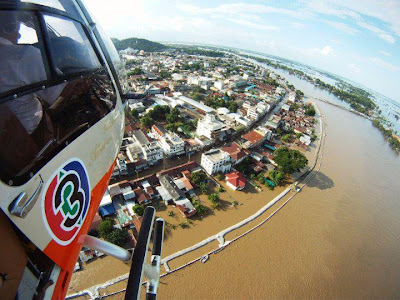
Thailand Floods In Pictures
The flooding is serious, we are talking of an area three times the size of Singapore (but, who isn't??!!). The minimal number of deaths has been astounding. Let's hope it subsides and they can rebuild their lives soon.




Wednesday, 19 October 2011
The Biggest Players In Asia Private Equity
The Asia-Pacific region is now a globally significant region for private equity, and 22% of funds seeking capital from investors have a primary focus on the region, says Stuart Taylor, Asian research manager at fund research firm Preqin.

| Top 10 Asia-Pacific funds by final close size | |
|---|---|
| 1. Lone Star Fund V (2005) | $5 bn |
| 2. TRG Asia V (2008) | $4.25 bn |
| 3. Morgan Stanley Real Estate Fund V International (2006) | $4.2 bn |
| 4. CVC Capital Partners Asia Pacific III (2008) | $4.12 bn |
| 5. Lone Star Fund IV (2001) | $4.1 bn |
| 6. Colony Investors VIII (2007) | $4.0 bn |
| 7. KKR Asia Fund (2007) | $4.0 bn |
| 8. MGPA Asia Fund III (2008) | $3.89 bn |
| 9. Pacific Equity Partners Fund IV (2008) | A$4 bn |
| 10. Avenue Asia Special Situations Fund IV (2006) | $3 bn |
| Top 10 Asia-Pacific funds closed since 2010, by final close size | |
|---|---|
| 1. Carlyle Asia Partners III | $2.55 bn |
| 2. Baring Asia Private Equity Fund V | $2.46 bn |
| 3. Shanghai Financial Sector Investment Fund I | Rmb11bn |
| 4. Yumfeng Fund | Rmb10 bn |
| 5. Hony Capital RMB Fund III | Rmb10 bn |
| 6. Champ Buyout III | A$1.48 bn |
| 7. CDH China Fund IV | $1.45 bn |
| 8. Citic Mianyang Private Equity Fund | Rmb9 bn |
| 9. SAIF Partners IV | $1.25 bn |
| 10. Navis Asia Fund VI | $1.2 bn |

Preqin estimates in its report that there are 371 Asia-Pacific funds currently on the road, seeking to raise $119 billion from investors. The largest one in the market exclusively focused on Asia is PAG I fund, a China-themed buyout fund looking for $2.5 billion in total.
Also on the hunt for capital are Hony Capital Fund V, which is targeting between $1.4 billion and $2 billion, and GuochangKaiyuan fund of funds, which is looking for Rmb10 billion.
| Largest Asia-Pacific GPs by total funds raised in the last 10 years | |
|---|---|
| 1. Pacific Equity Partners | $5 bn |
| 2. Baring Private Equity Asia | $4.7 bn |
| 3. CDH China Management Company | $4.7 bn |
| 4. Hony Capital | $4.4 bn |
| 5. SAIF Partners | $3.8 bn |
| 6. Affinity Equity Partners | $3.5 bn |
| 7. IDG Capital partners | $3.3 bn |
| 8. Jafco (Japan) | $3.2 bn |
| 9. MBK Partners | $3.2 bn |
| 10. China Bright Stone Investment Management Group | $2.9 bn |

| Top 10 Asia-Pacific Funds by net IRR | Net IRR |
|---|---|
| 1. Amwin Innovation Fund (by Champ Ventures) (1998) | 1025% |
| 2. Development Partners Fund (2005) | 105.5% |
| 3. Vietnam Equity Fund (2005) | 104.9% |
| 4. Headland Asian Ventures Fund 3 (2008) | 94.7% |
| 5. BankInvest Private Equity New Markets (2008) | 71.1% |
| 6. Baring Asia Private Equity Fund III (2005) | 66.2% |
| 7. USIT I (by Jafco) (1994) | 63.8% |
| 8. USIT II (by Jafco) (1997) | 63.7% |
| 9. Ant Bridge 1 (2003) | 59.2% |
| 10. Pacific Equity Partners Supplementary Fund 1 (2004) | 59% |
Subscribe to:
Posts (Atom)