Wednesday, 11 May 2011

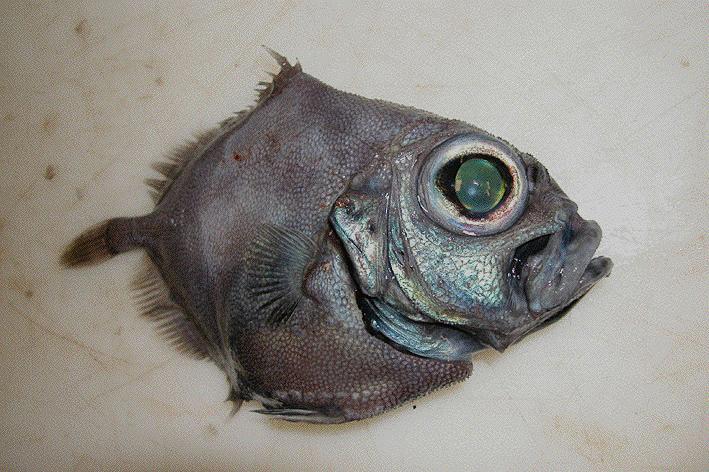
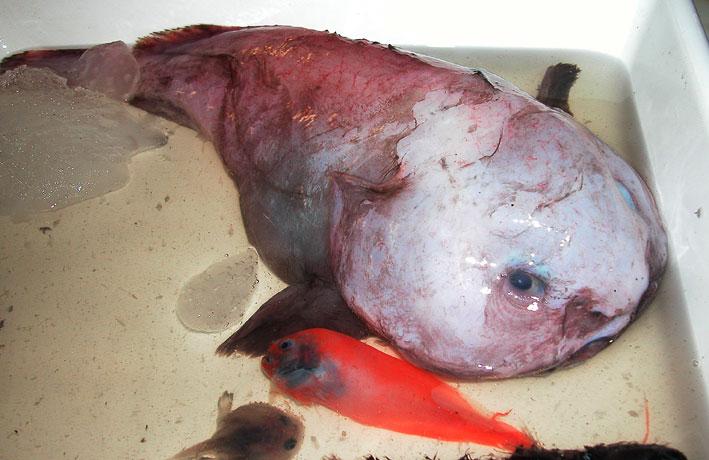
Look At What The Sea Dragged In


Creatures Found at Seaside After Tsunami
As everyone knows, the tsunami in Southeast Asia was devastating both in the loss of life and economically to the region. However now that the clean up is underway in the region, deep sea creatures that live too deep to be studied are being found scattered throughout the wreckage. These creatures were washed up on shore when the waves hit.


The Bald, The Beard & The Ugly (Inside Job, The Movie)


This was posted back in November 2008, and published in StarBiz as well. Well, they finally made a movie of the subprime mess. It was superbly done, I must say. Matt Damon was the narrator. I loved the many interviews, especially the ones fronting for the bad guys twitching and lying through their teeth ... Funny thing was, the bad guys are not just your usual suspects, they included many economist professors of high regard.

To watch the movie and to read my dated posting, I think I should have made the movie myself... lol.


I was watching the uncomfortable grilling by the US lawmakers on Ben Bernanke and Henry Paulson on the US rescue plan. Pity those two guys. They are trying to fix a problem which was inherited and they have to suffer the embarrassment of trying to persuade the lawmakers to approve the funds.

But who really are the culprits that brought about such a calamity? I shall try to ascribe blame to the relevant parties. But please note, it’s a highly subjective issue and everyone has a different opinion. Here’s my two cents worth (and rapidly diminishing two cents in value):

The blame game:

30% - Management of Investment Banks & Mortgage Lenders

They were greedy and overpaid. They had thrown risk management out the window. When the going is good, they pocket more than their fair share.

Paulson (left) and Bernanke could have tried to reverse the damage in their early days as they basically inherited a huge problem.– AP

The worst punishment they got was to walk out the door with nary an apology. The vast amount of liquidity in the system and the thirst for mortgages prompted them to “invent” new fangled instruments to package these loans and resell them, with little regard to the leverage effect.

Lenders kept pushing adjustable-rate and subprime mortgages, while investment banks bundled millions of risky loans and resold them to investors.

It was when these investment banks started to buy these same instruments that they really decimated their capital.

15% - Alan Greenspan

He will continue to deny it was his doing, but since 2001, he advocated lowering interest rates and continued a strong money supply growth policy.

That prompted the public to buy properties and even speculate in them. Greenspan was well known for lowering rates aggressively to counter any crisis €“ the query was that by doing that markets were never allowed to adequately correct the imbalances.

This led to the credit explosion.

He must have noticed the deterioration in the credit market back in 2003 and 2004 or was just plain blind. But he hadn’t warned lenders of using the “non traditional mortgages” now seen as a precursor to the credit crisis which unravelled as early as December of 2005, shortly before Greenspan resigned.

The excessive liquidity in the system was not just owing to the Fed’s measures. Major central banks were guilty of pumping vast amount of money supply into the system. Back in 2004, Greenspan opposed tougher regulation of financial derivatives, and actually praised adjustable-rate mortgages and refinancing for homeowners.

35% - Ratings Agencies

They are the unwitting culprits. (I am being nice here). They rated loans and bonds based on these mortgages AAA status, which caused many buyers to believe in their assurance that they were buying solid AAA papers.

The ratings agencies again acted too late to downgrade these papers €“ long after the damage is done.

They had earlier accorded high ratings and analysis which fuelled interest in these instruments to be hawked to unsuspecting investors. It is also this that led the investment banks to boldly pile up these instruments.

What kind of value-added analysis are the issuers paying these rating agencies for? It’s obvious that the analysts knew that a bulk of the packaged loans consisted of subprime.

Were the fees too enticing? Were the ratings agencies trying to curry favour with the banks? If these agencies cannot do their jobs without fear or favour, then how can investors rely on these ratings?

Maybe the US should empower the government to rate bonds, especially if the government requires certain kinds of fund managers to own only officially-rated bonds.

15% - The Regulators

The financial markets and the various instruments have their respective regulatory units.

You may include the Fed, the CFTC (Commodity Futures Trading Commission), the SEC (Securities and Exchange Commission), FDIC (Federal Deposit Insurance Corp), even the FASB (Financial Accounting Standards Board) into the fold.

They are supposed to regulate and oversee the markets and the financial instruments.

But where was the voice of reason? The last six years’ housing and subprime mortgage bubble and bust had little to do with excessive government intervention.

Instead, they had all to do with the lack of any basic sensible government regulation of the mortgage market.

They should have instituted new guidelines and rules to govern these CDOs (collateralised debt obligation), credit default swaps, and the leverage aspect of financial firms and their capital at risk.

Even now, they are mainly silent.

5% - US Treasury chief Henry Paulson & Federal Reserve chief Ben Bernanke

They could have tried to reverse the damage in their early days as they basically inherited a huge problem.

But only now, they are talking about having proper mechanisms to regulate derivatives and new instruments. Sigh.

There were institutions and people appointed to do these jobs; it’s just that they did not do their jobs properly. I am still waiting for some of the culprits to be prosecuted for what they did or didn’t do.

At the end of the day, it appears that what some of them didn’t do would be more punishable.

“But what about the American borrowers/homeowners,” you ask? Shouldn’t they too shoulder some of the blame? I left them out of the above equation for various reasons listed below:

a) I do think there should be an element of “personal responsibility” but it seems to me that they are already paying the cost of their foibles. Many have had their homes foreclosed, they have lost their deposits and payments made on these loans.

It seems to me, they are THE ONLY group that has actually “really lost” materially and has been punished.

b) The bailouts do not really bailout the end borrowers. They simply extend the life of the companies.

Maybe the bailouts will allow the companies more time to foreclose these properties in an orderly manner. Very few of those will be able to renegotiate their existing loans on decent terms to allow them to continue to fund their mortgages.

Most of the loans were priced at a time when property values were at least 30%-40% higher than now. Perhaps, it’d be better to declare bankruptcy than to continue to reconfigure the loan?

c) The public are not equipped to regulate themselves. That is why there are agencies created with “capable people” to regulate and monitor the markets.

You cannot expect the majority of borrowers to understand in detail CDOs, credit default swaps, or whether the brokers are leveraging themselves to the hilt.

You instead get assurance from top ratings agencies that brand certain papers as top notch grade. Who will really pore over hundreds of pages in a report, examine if these debt papers/bonds consist of thousands of small mortgages spread out over the country or how to value the price trends and affordability ratios of borrowers?

d) The public often acts in herd-like mentality and like most people, they are driven by the pursuit of wealth.

They see people making 50% in two years from speculating in properties and they, too, want to be part of it. Then they apply for loans, and were probably even more shocked that mortgage lenders were more than willing to lend to them.

The markets are often characterised by bouts of insanity; if you stir them up with enough incentives and carrots, people will act irresponsibly.

The regulating agencies are there to ensure an orderly market and to quell excesses. The people cannot do it themselves.

The ones who got out early will think they are very smart. The ones who got hit will think they were unfortunate victims. Both are wrong in their perception of their actions, financial decision making and brain power.

Both groups are closer to each other in every aspect than they would care to admit. It’s like a game of financial musical chairs “ the winners and losers are those who act the fastest/slowest when the music stops“ not how smart you are.

PS: In case you haven’t figured the headline out: The bald, the beard & the ugly are Paulson, Bernanke & Greenspan.

p/s photos: Ema Fujisawa (my date in Tokyo)


Monday, 9 May 2011

Steve Jobs Unique Management Style

There is no one correct way to run a company. Steve Jobs is a very special person. There are a lot of things we all could learn from him. Saw this in a summary of the things he did which was unusual in running the company that now has the largest market cap after Exxon. My comments in colour:

1) Partner with the enemy

Partner with the enemy

Can you imagine Pepsi and Coca-Cola getting together? Or Verizon and AT&T? That's how strange it was when Apple and Microsoft announced their partnership at the 1997 Macworld Expo. After 12 years of financial loss, Jobs needed to get Apple money, and quickly. So he turned to Bill Gates, who made a $150 million investment in Apple.

"The era of competition between Apple and Microsoft is over as far as I'm concerned," Jobs said. "This is about getting Apple healthy, this is about Apple being able to make incredibly great contributions to the industry and to prosper again.”

That is thinking out of the box. Would CEOs ever consider working with the competition? What else has guide us not to ever "potential solutions" outside of our comfort zone?

2) Put sex in products


Put sex in products

A great salesman, Jobs knew the importance of aesthetics; he realized Apple's products looked dated. In 1998, Jobs called a meeting at Apple, sat everyone down and said, "You know what's wrong with this company? The products SUCK -- there's no sex in them."

Today, Apple is credited for creating the most beautiful technology, from colorful iMacs to sleek iPads.

I don't think its sex but sexy. Macs beautiful design lines, same with the Iphones, they are sexy.

3) Change the original vision and business plan

Change the original vision and business plan

Apple began as a computer-only company, but Jobs knew it needed to broaden its approach if it wanted to become truly successful. Apple began expanding its products beyond just computers with the release of Final Cut Pro, followed by MP3 players, music, iPhones and iPads.

Jobs changed the company's name from Apple Computer, Inc. to Apple Inc. in 2007 to symbolize the new, broader vision.

A name change should be a reflection on changed direction and strategy. When would you consider to change your own name? If its just to create a different persona, it won't work (much like most companies in KLSE which changes their names like nobody's business), but if its a reflection of your whole character, motivations and well being, then its different.

4) Create solutions to impossible roadblocks

Create solutions to impossible roadblocks

Other retailers were not giving Apple products adequate positioning. Jobs' solution? The Apple Store. Scattered throughout the world, these successful outlets are now the "darlings of the retail computer industry".

Well, not every company can do that if they do not yet have a range of desirable products. Sometimes, we can still change the way we distribute our products, our channels, are we bound by old trusted relationships which may not be so effective now.

5) Tell customers what they want instead of asking for feedback


Tell customers what they want instead of asking for feedback

Jobs does not use focus groups. Instead, he tells customers what they want before they know they want it. "[Apple has] a great track record for making you want -- and buy -- things you thought you didn't need," says Carl Howe, director of consumer research for Yankee Group. Last year when the iPad was announced, people gawked. Nearly 20 million sales later, it's not so funny.

This is so important. This was my pet peeve against my previous company which uses focus groups and customer surveys before every new product launch. Why? Its because that was taught as bible in MBAs throughout the world. Yes, its important to do surveys and focus groups, but how often do you find that as being very successful. When you try to empower the users, you usually end up with the lowest common denominator. To me, that is akin to relinquishing the responsibility of the way you run a company to the users - how to blame management if your product or services do not sell if you use focus groups? A very useful way to absolve from taking responsibility and accountability. The most successful products and services we ever come across is often laced with, "Gee, I did not know I needed that, this is so great".

6) Connect dots


Connect dots

Apple releases products that are innovative in and of themselves, but they are also integrated visions. iPods mesh beautifully with iTunes; iPads and iPhones collaborate with the app store. According to Jobs, "creativity is just connecting things." Apple frequently shows how the sum is greater than all of the parts.


7) Don't hire cookie cutter employees

Don't hire cookie cutter employees

Ivy league graduates aren't the only people who can run companies. "Part of what made the Macintosh great was that the people working on it were musicians, and poets, and artists, and zoologists, and historians who also happened to be the best computer scientists in the world," Jobs said.

I think this is relevant for many companies. Do we usually hire senior people that fits a certain persona? When you are choosing important people, its more important that they have the x-factor to move things and make things happen, that they can think differently and energise the company, constantly thinking of how to move the company to the next level. Much of all that cannot be taught at MBA courses.

8) Encourage others to think differently


Encourage others to think differently

Apples' "Think Different" ad campaign in the late 1990's was one of the most effective of all time. It stimulated innovation and reinvention, which is what Apple, today, is all about.

9) Don't elaborate

Don't elaborate

Simplicity is bliss. Apple's designer Johnathan Ives confirms this strategy: "We are absolutely consumed by trying to develop a solution that is very simple, because as physical beings we understand clarity."

10) Sell dreams, not products

Sell dreams, not products

Jobs gets people hooked on a feeling. It's not the products his customers buy, it's what the products represent. Remember, people first and foremost care about themselves, so make products they can relate to.

But my product is so basic, where to link it to dreams? Well, CPO could be linked to proper cultivation and production techniques that are sustainable and is green (if properly strategised and executed) - a cleaner future. Granted, not all companies can do that, but even the most noxious like Shell and BP have marketing strategies that put a "nice feel" to their services/people - yes, propaganda and lies also have their place. Google's high falutin "Do no evil" is actually a commendable dream in more ways than we care to appreciate (that mantra is completely opposite to what Microsoft stands for, lol). We cannot help if some are not so genuine, but when they are, they are home runs.

11) Trust your gut


Trust your gut

Steve Jobs said in his Stanford commencement speech: "Have the courage to follow your heart and your intuition. They somehow already know what you truly want to become."


Saturday, 7 May 2011

Neologism - Wit & Sarcasm In Wordplay


My favourites in bold. I would crown LYMPH and IGNORANUS as the champs in their respective categories. I guess my own quick contribution would be:
Singaporn - a place called Geylang
Bras Basah
- a really sloppy laundromate, also near Geylang
Bohtea - really slutty girls who really like their chai latte
Parliamentari - the bewildering 'dance' of the blase and blah-blahs

The Washington Post has published the winning submissions to its yearly neologism <http://en.wikipedia.org/wiki/Neologism> contest, in which readers are asked to supply alternative meanings for common words. The winners are:

1. Coffee (n.), the person upon whom one coughs.
2. Flabbergasted (adj.), appalled over how much weight you have gained.
3. Abdicate (v.), to give up all hope of ever having a flat stomach.
4. Esplanade (v.), to attempt an explanation while drunk.

5. Willy-nilly (adj.), impotent.
6. Negligent (adj.), describes a condition in which you absentmindedly answer the door in your nightgown.
7. Lymph (v.), to walk with a lisp.
8. Gargoyle (n), olive-flavored mouthwash.
9. Flatulence (n.) emergency vehicle that picks you up after you are runover by a steamroller.
10. Balderdash (n.), a rapidly receding hairline.
11. Testicle (n.), a humorous question on an exam.
12. Rectitude (n.), the formal, dignified bearing adopted by proctologists.
13. Pokemon (n), a Rastafarian proctologist.
14. Oyster (n.), a person who sprinkles his conversation with Yiddishisms.
15. Frisbeetarianism (n.): The belief that,when you die, your soul flies up onto the roof and gets stuck there.
16. Circumvent (n.), an opening in the front of boxer shorts worn by Jewish men.

The Washington Post's Style Invitational also asked readers to take any word from the dictionary, alter it by adding, subtracting, or changing one letter, and supply a new definition.

Here are this year's winners:
1. Bozone (n.): The substance surrounding stupid people that stops bright ideas from penetrating. The bozone layer, unfortunately, shows little sign of breaking down in the near future.
2. Foreploy (v): Any misrepresentation about yourself for the purpose of getting laid.
3. Cashtration (n.): The act of buying a house, which renders the subject financially impotent for an indefinite period.
4. Giraffiti (n): Vandalism spray-painted very, very high.
5. Sarchasm (n): The gulf between the author of sarcastic wit and the person who doesn't get it.
6. Inoculatte (v): To take coffee intravenously when you are running late.
7. Hipatitis (n): Terminal coolness.
8. Osteopornosis (n): A degenerate disease. (This one got extra credit.)
9. Karmageddon (n): its like, when everybody is sending off all these really bad vibes, right? And then, like, the Earth explodes and it's like, a serious bummer.

10. Decafalon (n.): The grueling event of getting through the day consuming only things that are good for you.
11. Glibido (v): All talk and no action.
12. Dopeler effect (n): The tendency of stupid ideas to seem smarter when they come at you rapidly.
13. Arachnoleptic fit (n.): The frantic dance performed just after you've accidentally walked through a spider web.
14. Beelzebug (n.): Satan in the form of a mosquito that gets into your bedroom at three in the morning and cannot be cast out.
15. Caterpallor (n.): The color you turn after finding half a grub in the fruit you're eating.

And the pick of the literature:
16. Ignoranus (n): A person who's stupid AND an asshole.


Friday, 6 May 2011

Power Of Words

We use words all the time to convey opinions, point of views ... we can all be looking at the same thing but words chosen carefully will generate enthusiasm or shed new light. The brilliant video by Purple Feather UK reminds us that we can use our words wisely or wrongly.

I believe words are to be used to shine clarity at issues and things. My own mantra: TRUTH MUST BE PERSUASIVE.


http://www.youtube.com/watch?v=Hzgzim5m7oU&

Thursday, 5 May 2011

Let's Tackle This Major Issue - Foreign Workers

Is foreign workers good or bad for Malaysia? This is not just coffee shop talk, and while we are at that, ... my Nepalese friend is bringing me my duck rice while my Indonesian friend is asking me if I want kopi-o or kopi-o ping. I am saddened that our government, obviously, have not given much thought to the economic ramifications of excessive foreign labour.

http://www.rujakmanis.com/gallery2/d/590-1/Nia-Ramadhani_2.jpg

The towkays would say, fine, bring them in, they are filling jobs locals do not want. BULLSHIT, you fat asses!!! Locals do not want the work because of the stagnant pay and horrendous working conditions. Please check how many Malaysians go "jumping ship and planes" to work as farm labourers in the US and Australia, that's because they pay RM30 an hour, not RM30 a day for that kind of work.

Our government have taken the easy way out to suppress cost for businesses. That's why we have the largest contingent of foreign workers as a percentage of our labour force in Asia. Its to keep us competitive, they say. I say more B.S. .... maybe the government do not understand the economic ramifications of such a major policy. That is the really sad part.

When foreign workers total 30% of your labour force, you are basically forcing down the salaries for everyone else. But you forgot that salaries are but one component of the overall cost of goods and services - can you also import cheaper land??? That's why graduates salaries have been the same now and 15 years ago, unbelievable, but the cost of housing have tripled.

http://www.rujakmanis.com/gallery2/d/1300-1/Dandanan+Pink+Ala+Nia.jpg

You may be able to control the basic necessities such as rice, flour, sugar and even fuel and gas - but thats because we are subsidising them. Can you also get foreign workers to dig oil out at the same cost for the past 15 years? Suffice to say, our subsidy cost has tripled over the past 15 years and we can no longer afford to do that, thats why fuel prices have to keep going up even with subsidy. Its the same for all commodities. Unless you can impart the same cost savings in all matters of land, housing, food and commodities ... suppressing wage bills has been making most Malaysians finding it harder to make a living. Tell me if I am wrong. I wish I was.

Simply put, a country's economic progress is only as good as our natural resources, the way we allocate and invest our surpluses and the collective productivity and efficiency of our workforce. This is the most important point to this issue - the more we rely on foreign workers, the more we suppress our wages, hence at the same time we are seeing a greater brain drain of our capable citizens to foreign shores for better pay.

See if Singapore will crumble without Malaysians, of course it will. See how many of our capable people are working now in the Middle East, HK, China, Australia and of course Singapore. WE ARE BASICALLY REPLACING ALMOST EACH OF THOSE "BRAIN DRAIN-ED" WITH FOREIGN WORKERS!!! How do we not expect our economic progress be limited or even stunted over a prolonged period of time??!!


I have nothing against foreign workers, they just have to make a living. If its not Malaysia, its somewhere else. Malaysia already is the TOP DESTINATION for Asian migrants who account for 8.4% of our population. The economic disservice is that they are only contributing at the lowest levels of work stratum; PLUS they are remitting tons of money back to their home country - if they were spending and reinvesting into Malaysia, then its a different kettle of fish. Any economist can see that this is a bad thing for the economy.

https://blogger.googleusercontent.com/img/b/R29vZ2xl/AVvXsEjDvMAsTRECGLuBlo5C5Q88i6zCkx0ldQZCpsex9hJotUyeF-_PiC9UvfzujcgUv2p_bcs3plWc-__tOPblCggV6Pw5Id5guThsB_7fG57yhZ-GmAOvN103uHJ_zhbpStrCoBIEh3EZOiE/

So we are replacing skilled workers with unskilled workers - wages stagnant but other cost of living components rising like nobody's business. Malaysia has been able to tolerate that disparity for so long because of our natural resources, but its getting a lot tougher. Ask the government finance department and they can tell you that "oops, its not balancing out that well".

Reverse that policy immediately:
- implement a RM500 monthly levy for every foreign worker for a start immediately, be they in construction, plantations, services or even maids.
- increase that levy to RM1,000 a month per worker from 2013 onwards. Then you can see employers shifting their thinking and business model.

Yes, wage bills will rise, but its a necessary evil for a start. The economy will become more equitable as more money flows through the system. Yes, public service wage bills will jump and so too will graduates starting pay. Yes, we will end up paying a lot more for goods and services but things should even out a lot better for all Malaysians over the longer term.

We have to seriously do this NOW because the consequences are pretty dire if left the way it is. Its not the hardware, but the software that needs upgrading, people.

I have posted before on Malaysia's middle-income trap:
http://malaysiafinance.blogspot.com/2010/08/malaysias-middle-income-trap-or-is-it.html

http://i386.photobucket.com/albums/oo307/beautifulnara/niaramadhanicomel.jpg

Wednesday, 4 May 2011

Indonesia Revisited

While we are debating whether 1Malaysia really works or just lip service, while we are debating whether corruption is more prevalent now than before, while we are debating the transparency and selection process in which projects are being farmed out by ETP and Petronas, while we are trying to pooh-pooh the World Bank's report on outflows and and brain drain issues, while we are debating over the usage of the word Allah, while we are debating over yet another stupid sex video .... Indonesia has surged past Malaysia by a huge margin as the preferred investment destination over the last 5 years. Use any statistics you want, Indonesia would have come up trumps against Malaysia.

http://74.81.94.37/~gadiscom/data/media/1/00000009_sumahan_Malang_Indonesia.jpg

Heck, while we are at it, even Thailand is a better preferred destination than Malaysia over the past 3 years, and bear in mind that Thailand had a serious and long drawn "riots/clashes between the reds and yellows" ... and still FDI wants to be there than in Malaysia.

EVER WONDERED WHY LOCAL MEDIA HAD VERY LITTLE NEWS ON INDONESIA'S BRILLIANT RUN OVER THE LAST 3 YEARS???

Indonesia is showing everyone that it takes VERY LITTLE to change and improve. So, what did they do, and what didn't we do:
- Indonesia effectively eradicate important channels of corruption (even though pockets of corruption still exists), bring corrupt big dogs down by charging them in court, as Indonesian courts have more of a backbone than our flawed justice system - that brings forth accountability, enforceability, and that improves perception and comfort level for foreign investors.
- improve corporate governance and government governance.
- give back total independence to the judiciary.
- cut out as much leakages and wastage from the country as possible.
- conduct all projects, resource allocation with utmost transparency and fairness.
- the total lack of acceptance to have a fair media environment in Malaysia, one should issue publishing licences to those who want, let an objective and independent judiciary decide if and when any of them do "wrong things", not up to the government to judge ... who in Malaysia still reads the mainstream media as a serious information disseminating service?
- a vibrant and relatively open media in Indonesia.
- conduct fair elections at every level to weed out discontent and to absolutely get the people's voice and backing.
- This one gutted me the most, Indonesia has linked up so well with India and China, like you would not believe, what Malaysia has done with India (negligible) and China (probably one-fifth of what Indonesia has inked with China) has been deplorable. Considering Malaysia HAD THE NATURAL EDGE with their Malaysian Chinese and Malaysian Indians citizens ... why??? ... its because they WERE NOT EVER EMPOWERED by the government and their supporting policies and functionary bodies.


Yes, its nice to beat their football and badminton fellas, but I'd rather we match their strides in governance, transparency and fairness.

--------------------------------

International financial company JP Morgan praised Indonesia`s economic policies that had made the country one of the world`s most attractive investment destinations.

"The Indonesian government has worked well and we believe Indonesia has become an attractive place for investment and it will continue to develop," JP Morgan Chase`s Chief Executive Jamie Dimon said to newsmen after meeting with President Susilo Bambang Yudhoyono recently.

He said he had discussed a number of economic issues with President Yudhoyono in the meeting including investment, energy and development.

"We have also been briefed about the Indonesian economic development acceleration program (MP3EI) and hope we can help and be involved in it," he said at a press conference with head of the Capital Investment Coordinating Board (BKPM), Gita Wirjawan.

Gita Wirjawan meanwhile said President Yudhoyono in the 30-minute meeting with Dimon had explained about the government`s plan in implementing the program. President Yudhoyono had expressed wish for banks like JP Morgan to help with funds as the program would require a lot of funds.

Besides discussing MP3EI they had also talked about Indonesia`s position which has become better and more attractive as an investment destination country as well as the settlement of global bonds with JP Morgan worth UD$2.5 billion.

"Several days ago they just helped the Indonesian government through the finance minister to settle the global bonds worth US$2.5 billion with yields at the lowest so far. This gives a good prospect as the pricing of global bonds has already reflected Indonesia`s eligibility as an investment grade country," Gita said.

He said "we hoped persons like Jamie Dimon could tell his colleagues in the international financial institutions that Indonesia has a right to be given an investment grade status."

Regarding the Overseas Private Investment Corporation (OPIC) meeting Gita said Indonesia would be the host for the meeting with minimally 250 businessmen from the United States from various sectors.

"This is the initiative of the US government for Indonesia. The business leaders that would come are from companies operating in infrastructure, renewable energy. We hope there would also be technology companies so that we could conduct joint investment and production," he said.


https://blogger.googleusercontent.com/img/b/R29vZ2xl/AVvXsEi57owu8TZehkgzDOfnfo13JZL47wruzrclN4-GMwjFr-5xyzPJJD0Q5hN5khHylA0CtXDxZ-u-bXH6A0ziIHLM88vpOj9Qg4pLcKRFIR0H_HS9yNlCj8AUgqO__mBnNG7q4eaUP5LU68BR/s320/00000002_sumahan_Malang_Indonesia.jpg
-----------------------------------

The State Enterprises Ministry has hinted dividend payments by state firms to the government this year are likely to increase to Rp30.763 trillion from last year`s Rp27.59 trillion.

The dividend payments would consist of cash dividends worth Rp27.590 trillion and interim dividends worth Rp3.173 trillion, State Enterprises Minister Mustafa Abubakar said.

The increase in dividend payments included interim dividends, he said. However, he stopped short of revealing which state firms had paid interim dividends amounting to Rp3.173 trillion. The government has set the target of dividend payments from state firms at Rp27.5 trillion for this year, or 8 percent lower than those in 2010. Dividend payments to the government from state firms last year rose to Rp30.09 trillion from Rp29.5 trillion a year earlier.

Mustafa said the rising dividend payments were fueled by an increase in state companies` profit. "State companies are estimated to have posted a combined net profit of around Rp100.4 trillion in 2010, surpassing the target of Rp98 trillion."

In total, state firms booked more than Rp1,000 trillion in income last year compared to Rp930 trillion the year before, according to the ministry.

Mustafa said the rising income resulted from the improving financial performance of state firms particularly those engaged in the energy, mining and banking sectors. (*)


https://blogger.googleusercontent.com/img/b/R29vZ2xl/AVvXsEiB2ROpY8cKUH9buhbde-uhJq7_naAyaJvyHJqHXsBkHEEnByXfzmfcCJMhJkdIziSidlUi3wm8aKFZ1OVNkmVRqDjM8R_EY-c7YiqWEX020BzeMu0vAqcaAFSofmsU0x3NyKfO-HvCJi1l/s320/00000001_sumahan_Malang_Indonesia.jpg
----------------------------------
Industrial products served as the main engine of Indonesia`s non-oil/non-gas exports in the first quarter of 2011 when they grew 34 percent compared with the same period last year, Trade Minister Mari Elka Pangestu said.

In the first quarter of 2011, industrial products contributed US$28.4 billion to the state coffers compared to US$21.1 billion in the corresponding period last year, she said when disclosing monthly export and import performance.

Quoting data from the Central Statistics Agency (BPS), she said industrial products accounted for 62.57 percent of non-oil/non-gas exports in the first quarter of 2011 compared to 59.39 percent in the same period last year.

"The increase in industrial product exports is one of the indicators that the domestic industries have begun to recover," she said.

Among the industrial products that recorded growth at the start of this year were textiles and textile products, footwear, electronics and automotive products. Data from the Trade Ministry show textile and textile product exports rose 14.4 percent to US$1.89 billion in the first two months of this year from US$1.65 billion in the same period last year. The data also show electronic product exports increased 12.2 percent to US$1.63 billion in the January-February 2011 period from the year before. Footwear exports jumped 44.1 percent to US$507.4 million in the year to February 2011 from US$352 million a year earlier. Automotive product exports meanwhile climbed 46.1 percent to US$490.6 million in January and February 2011 from US$335.9 million in the same period last year.

According to BPS, large-and medium-sized industries in the first quarter of 2011 recorded a 5.51 percent increase in their production compared to 4.26 percent in the same period last year.

"This is quite good because it exceeds 5 percent," BPS Chief Rusman Heriawan said.

------------------------------------------------
https://blogger.googleusercontent.com/img/b/R29vZ2xl/AVvXsEj0KEyQFiUZm1TpH2IKro09ksfS69xQak9dv9ARY4oELUUUMIoSxqXlmDZiStXRZvO2c9URne2DMLWwY9kK6DHOG91EC_m3FQ9BmzxzhPoXJXv_SgrKn3rBxuuZtx7YP8SVGyjJf2yd2XAZ/s320/00000010_sumahan_Malang_Indonesia.jpg

Despite mounting concerns about inflation, Jakarta says GDP of 7-8 per cent is achievable in coming years if the current trends of strong consumer demand and large capital inflows continue.

“Economic growth will be more than (the projected) 6.4 per cent this year. If there are extraordinary circumstances, the economic growth could expand to reach close to 7 per cent”, Central Statistics Agency chief Rusman Heriawan was quoted by the Jakarta Globe as saying.

But to achieve such an ambitious target the country will need to address concerns of investors about government red tape, weak infrastructure and rising inflation, say observers.

The economy expanded by roughly 6 per cent in 2010 and the official government forecast is for an acceleration to 6.4 per cent in 2011. The country’s vice president and former central bank governor, Boediono, was even more optimistic:

“Our economic growth may exceed 6.4 per cent. Given the current positive trend, reaching between 7 per cent and 8 per cent is not impossible”, he told the Tempo newspaper.

Finance Minister Agus Martowardojo said with improved infrastructure alone, GDP would surpass 6.4 per cent this year. That – optimistically – implies the government will succeed in implementing plans to spend tens of billions of dollars on roads, ports, power plants and railways.

--------------------------------

Interesting Newsbites

- Did you know that Indonesia's reserves, which used to be below 20% of Malaysia's total a few years back, is now at the same level as Bank Negara's.

- While corruption still exists, in particular at certain government departments and local councils, there has been a massive improvement in eradication of corruption at the corporate level and at important ministries (finance, immigration and custom).

- Foreign portfolio investment in Indonesian equities hit US$1.29 billion in Q3 2010, up 137% y/y (more than 200% q/q) and representing the highest USD value of equity inflows in the market's history, narrowly beating the previous high of US$1.28 billion set in Q2 2007 (which was followed by another US$1.26 billion in Q3 2007). That said, inflows into debt securities dwarfed those into stocks, reaching US$4.9 billion in Q3 2010, still significantly below the Q1 2010 high of US$6.2 billion. This surge in debt investment helped drive foreign holdings' share of outstanding government debt to an all-time high of 30% by end-2010.

- In 2009, Indonesia had the world’s second-best performing stock market, up nearly 86%. And in 2010, it has climbed nearly another 50%.

- The improvement has been led by reduced global risk aversion and capital inflows, Indonesia's superior economic performance relative to other ASEAN countries and political stability after parliamentary and presidential elections in April and July 2009. The SBY era has heralded a lot of effective change and transparency. Yes, a lot of credit should go to the ex-Finance Minister, Sri Mulyani Indrawati, and a lot more should have been done to save her position. She was a victim for fighting with the indispensable Bakrie Group - that episode could have been better handled.

- Indonesia suspended trading for the first time in eight years on October 8-10, 2008, after a sell-off in Asia and emerging markets caused a 10% stock-market slide, the biggest decline since 1998. The central bank reserves the right to conduct open market operations. Regulators may halt trading if the index falls below certain level.

- In late 2008, the government began allowing firms to buy back shares worth up to 20% of their paid-up capital (upping the previous limit of 10%), with government funding of US$420 million. The government also eased the rule requiring firms to have shareholder approval to do so.

- Political stabilization has enhanced investor sentiment and foreign investment inflows. Indonesia's large population has supported robust domestic consumption and allowed Indonesia to depend less on international trade. The government's US$7.2 billion stimulus package (2009) and supportive economic policies will continue to attract foreign investment.


- Indonesia is the third largest democracy, according to the Economist. Another reason: it is home to 245 million (the fourth largest population). It is the 16th largest economy (according to the CIA World Factbook). And in 2009, Indonesia joined the G20.

- Indonesia's economy grew 6.9% in the fourth quarter, year-on-year, the fastest pace in six years. And that "resilient economic performance" was one of the reasons that S&P upgraded the country's credit rating to the highest level since the Asian credit crisis in 1997. The country's debt is now one level below investment grade (with equivalent rankings from Moody's and Fitch Ratings). And S&P's "positive" outlook has implications: if the country achieves an investment grade rating it will increase capital inflows as it opens the way for more funds to invest there. But the real vote of confidence came from Saudi Arabia. Saudi Aramco, the world's largest oil exporter, will expand into Indonesia.

- But Indonesia has problems as well. The day the government reported their GDP reading, religious violence killed three people. And the next day three churches were burned to the ground by an angry mob. Extremism is an unfortunate part of the fabric of life, and according to estimates religious violence increased 50% last year (with over 100 attacks in 2010).

- And then there's inflation. Some are concerned … the Indonesian government is not. Inflation slowed to 6.65% last month (back in September 2008 consumer prices rose 12.4%).

- Although GDP per capita grew by 11% in each of the past three years, the country still has among the lowest labor costs in the region, with wages that are roughly0ne-third the level of Malaysia and half the going rate in China. This low-cost looks to make the quickly growing country a manufacturing powerhouse in the near future as more businesses look beyond China for cheaper options.

- Unlike many countries in the region, Indonesia has a robust consumer driven economy which is rare for a country of its economic development level. This is largely due to the country’s large middle class and its strong population trends; by 2012 the middle class will have increased by 50%; representing the addition of 27 million households (or adding the entire population of Malaysia) to its ranks. Additionally, the country has slightly more than half (55%) of its population under the age of 30, and one-third under the age of 15 which could be good news as these citizens age and reach their top earning years in the near future.

- Indonesia’s economic growth may accelerate to 7 percent starting in 2011, providing a case for its inclusion in the so-called BRIC economies along with Brazil, Russia, India and China, Morgan Stanley said. Political stability, improved government finances and “a natural advantage from demography and commodity resources are likely to unleash Indonesia’s growth potential.”

[<span class=

Challenges

The main obstacles for further development in Indonesia include deficiencies in basic infrastructure as well as health care and primary education, as highlighted by the Global Competitiveness Index. Furthermore, the country is limited in terms of capital access, due to its macroeconomic environment. Corruption is perceived to be very high, as evidenced by Indonesia’s performance in Transparency International’s Corruption Perceptions Index.

Some of the major problems in Indonesia today are:

  • Indonesia remains prone to sectarian and ethnic violence

  • More than 15% of Indonesians live below the poverty line

  • Infrastructure is poor, if not non-existent


Trade regulations, on the other hand, are less restrictive although the country does impose protective tariffs. The tax regime in Indonesia is welcoming towards investment, both domestic and foreign, and the country has a well-established bankruptcy law. Indonesia has signed and ratified the Convention on the Settlement of Investment Disputes Between States and Nationals of Other States. Corruption is extensive and of concern to investors, reflected in Indonesia’s ranking of 143rd out of 180 countries in Transparency International’s 2007 Corruption Perceptions Index.

Indonesia Outlook 2010 And Beyond:

Asia is believed to be the source of world economic growth in the future. Led by China, the East Asian economy is projected to contribute to three quarters of 2.5 percent of world economic growth in 2010. Although its not just India and China in the Asian growth story. With a wealth of natural resources including copper, gold and coal Indonesia today is becoming an increasingly attractive investment market. With growth rates rising exponentially in China, its appetite for commodities also makes Indonesia - with its close proximity and abundance of natural resources - an ideal partner. Indonesia today is reaping the rewards of good economic policy and responsible debt management, boasting a 4.5 percent growth rate last year and expected to grow by 5.5-6 percent in 2010

Since ASEAN was founded in 1967, Indonesia has always been playing important role in ASEAN. Private consumption accounts for about two-thirds of Indonesia's GDP. Indonesia is also making real efforts to increase accountability in its energy and resources sector by moving to become a candidate country in the Extractive Industries Transparency Initiative (EITI).

Indonesia needs at least $140 billion in investment over the next five years to upgrade infrastructure and meet President Yudhoyono’s goal of 6 - 7 percent annual growth. Two-thirds of that funding will have to come from foreign investment. An enormous market size, young work force, growing economy, and political stability, Indonesia is dressing up for foreign investors in the times to come.

The country still has issues with deeply entrenched corruption, failing infrastructure and legal uncertainties. Yet it still offers big returns for investors to revel in.

  • Overall, Indonesia has sound economic fundamentals and sustainable economic growth at around 6%.
  • It also boasts low benchmark interest rates, high foreign currency reserves and strong foreign direct investment.

That all factors into why the Japan Credit Rating Agency upgraded Indonesia’s government debt to investment grade this year.

It should know, since Japan is Indonesia’s largest, foreign, long-term investor. Investors there have long-kept parts of their fellow Asian nation in their portfolios.


Indonesia Stock Bubble Formation?

While the Indonesia markets surge attracting foreign investors to the countryForeign investors are snapping up Indonesia’s stocks and bonds. It's important to note that Bank Indonesia board members last year discussed the risks posed by an influx of foreign funds, and the bank studied the feasibility of imposing capital controls. Whatever might be the case, its quite clear that Indonesia is one of the most promising emerging markets not only in Asia but in the whole world.